random_algorithm
A very simple yet original random algo made while overthinking about randomness



random_algorithm is a Python library that generates random numbers using a novel approach based on English words and the current epoch time. It utilizes ASCII values of shuffled words, reduces them to single digits, and combines these digits to generate a random number of a specified size. This implementation attempts to get as close as possible to true randomness by using time-based factors and word shuffling.
Features
- Generates random numbers based on shuffled English words.
- ASCII values of each word are reduced to single digits.
- Supports dynamic generation of random numbers of any specified size.
- Includes special logic to generate lower numbers (like
0or1), which can sometimes be difficult to produce with traditional randomization methods. - Provides functions to extract seeds based on time and to reduce any number to a single digit.
Usage
Install the package in your repo
pip install random_algorithm
If you use a requirements file, add this line to it :
random_algorithm==1.1.0
You can import and use the library in your Python code like this :
from random_algorithm import gen_random
Example :
Generate a random number with a desired size of 5 digits
random_number = gen_random(desired_size=5)
print(f"Generated random number : {random_number}")
You can also use the following internal functions :
ascii_reduce(word, index):- Takes a word (ex
"github") and an index (can be any positive number) as input. - Reduces the word to a single digit (returns an
int).
- Takes a word (ex
reduce_to_single_digit(n):- Reduces any integer
nto a single digit by summing its digits repeatedly until one digit remains. - For example,
reduce_to_single_digit(9875)would return2.
- Reduces any integer
get_time_seed():- Generates a seed based on the current time and ASCII reduction of character permutations.
Handling errors
gen_random() will raise the following exceptions if invalid inputs are provided :
TypeError: Raised whendesired_sizeis not an integer.ValueError: Raised whendesired_sizeis less than 1.
WARNING
The code works fine but isn’t the most optimized ever.
Generating huge numbers will take a lot of time ! I you really need a big random number, call the function multiple times with low numbers (ex 1 or 2) and concatenate the results
How it works
- Word shuffling : The words from
wordlist.txtare shuffled on each call to ensure randomness. - Random index : The current epoch time is used to generate a random index into the shuffled word list.
- ASCII reduction : Each word’s ASCII values are reduced to single digits and then summed to produce a random number.
- Low numbers handling : A special condition ensures that numbers like
0and1can be generated using the current epoch time modulo operations. - Time Seed:
get_time_seed()creates a seed value based on permutations of characters from the current time.
Side notes
The time it takes to generate numbers is pretty linear, I’d evaluate it to
Here’s a quick overview :
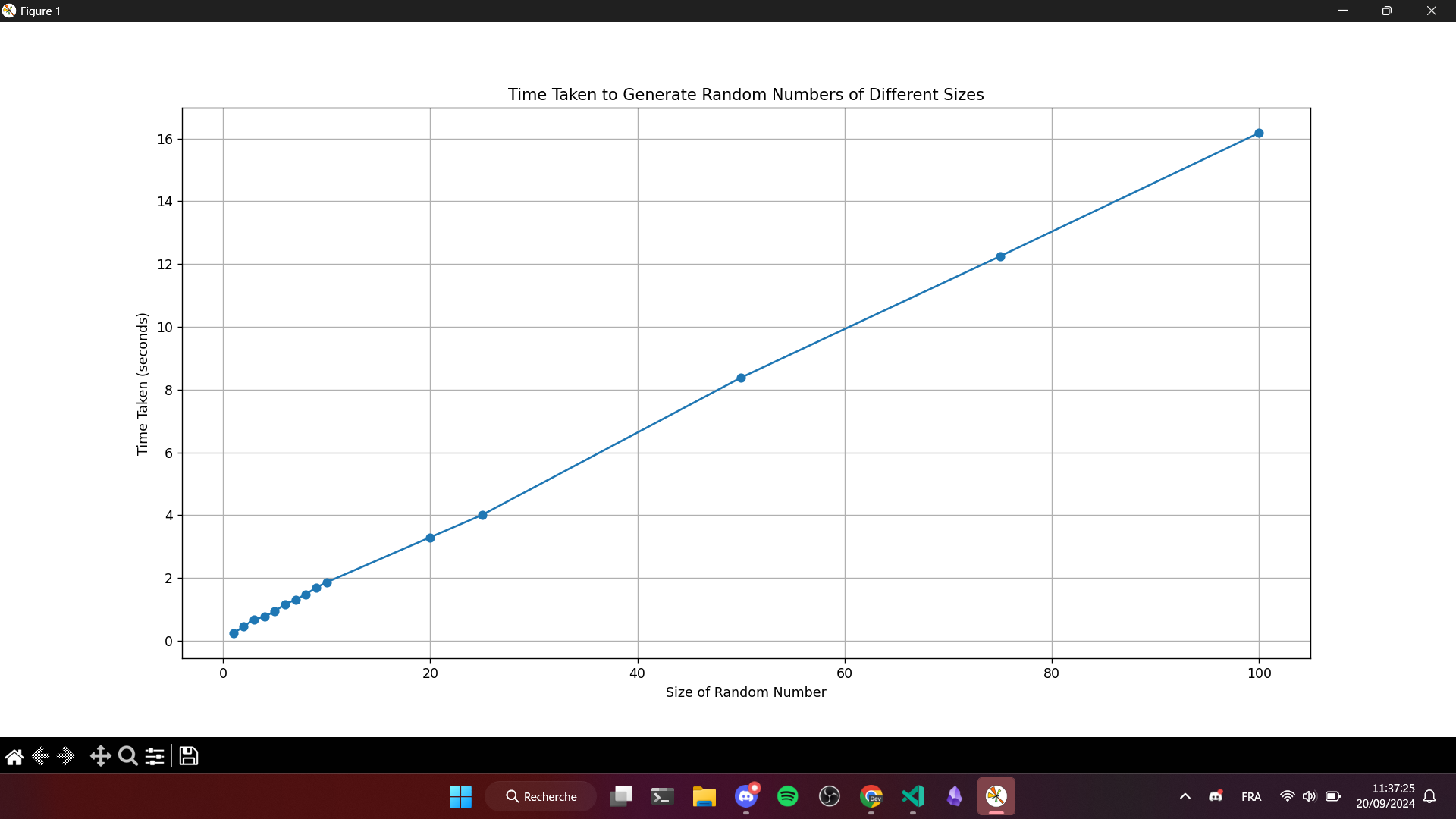
On my potato PC, an extrapolation of some results give the following formula (keep in mind that performance will change depending on your hardware) :
As a final info, here’s the word length distribution of the dictionnary we use :
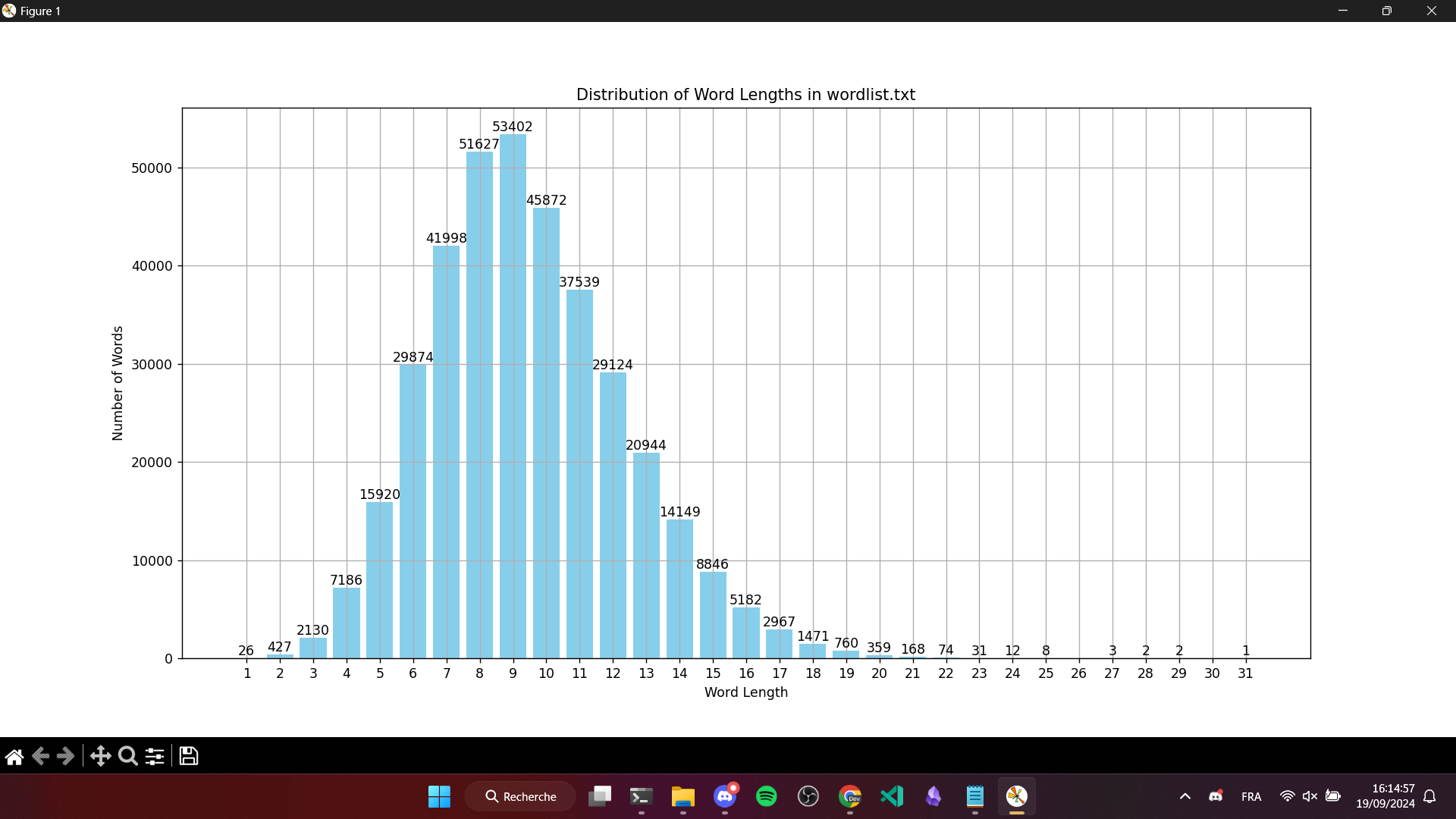
(more)
Contributing
Feel free to open an issue or a pull request if you want to contribute to this project
How to build ?
py -m pip install --upgrade pip build twine setuptools wheel
py -m build
py -m twine check dist/*
# Optional : publish to test.pypi.org
py -m twine upload --repository testpypi dist/*
# Or to pypi.org
py -m twine upload dist/*
License
This project is licensed under the MIT License - see the LICENSE file for details.
The wordlist comes from from https://github.com/dwyl/english-words.
Authors
- EDM115 - Initial work